Rechercher dans ce blog

Tuesday, October 4, 2022

Angelina Jolie Details Abuse Allegations Against Brad Pitt in Countersuit - The New York Times

In court papers related to a legal battle over a French winery they once owned together, she claims that he was abusive to her and their children during a 2016 plane ride.

Angelina Jolie filed a cross complaint against her ex-husband Brad Pitt on Tuesday, disclosing new details about what she described in court papers as abusive behavior by him on a private plane in 2016 that led to the dissolution of their marriage.

In a court filing in Los Angeles, filed as part of a legal battle over a winery the prominent Hollywood actors once owned together, lawyers for Ms. Jolie stated that negotiations to sell her share of the business to Mr. Pitt had broken down over his demand that she sign “a nondisclosure agreement that would have contractually prohibited her from speaking outside of court about Pitt’s physical and emotional abuse of her and their children.”

Her filing goes on to describe an extended physical and verbal outburst in September 2016 as Mr. Pitt, Ms. Jolie and their six children flew from France to California. “Pitt choked one of the children and struck another in the face” and “grabbed Jolie by the head and shook her,” the filing states, adding that at one point “he poured beer on Jolie; at another, he poured beer and red wine on the children.” Federal authorities, who have jurisdiction over flights, investigated the incident but declined to bring criminal charges. Days after the plane trip, Ms. Jolie filed for divorce.

Lawyers for Mr. Pitt did not immediately return several phone calls and emails seeking his response on Tuesday. In 2016, unnamed people close to Mr. Pitt were quoted in various publications saying that he had not been abusive toward his children.

The decoupling of Ms. Jolie and Mr. Pitt has stretched on for years, drawn out by a court battle for custody of their children and, more recently, a lawsuit instigated by Mr. Pitt over the French winery, Château Miraval, that the couple bought more than a decade ago. Mr. Pitt’s lawsuit, filed this year, accused his ex-wife of violating his “contractual rights” when she sold her half of the company to a subsidiary of Stoli Group without his approval.

Ms. Jolie’s cross complaint said she only sold her stake elsewhere after talks broke down over his demand for a nondisclosure agreement. Her filing states that the F.B.I. agent who investigated allegations that Mr. Pitt physically assaulted Ms. Jolie and their children on the plane in 2016 had “concluded that the government had probable cause to charge Pitt with a federal crime for his conduct that day.”

Lionel Cironneau/Associated Press

A redacted F.B.I. report on the case, which was reported on by several news outlets in August and later obtained by The New York Times, states that the agent provided the United States Attorney’s Office “copies of a probable cause statement related to this incident.”

“After reviewing the document, representative of the United States Attorney’s Office discussed the merits of this investigation with the case agent,” the report said. “It was agreed by all parties that criminal charges in this case would not be pursued due to several factors.”

The F.B.I. report described Ms. Jolie as “conflicted on whether or not to be supportive of charges” related to the case.

Representatives from the F.B.I. and the U.S. Attorney’s Office in Los Angeles declined to comment.

“She has gone to great lengths to try to shield their children from reliving the pain Pitt inflicted on the family that day,” Ms. Jolie’s lawyers wrote in the cross complaint. “But when Pitt filed this lawsuit seeking to reassert control over Jolie’s financial life and compel her to rejoin her ex-husband as a frozen-out business partner, Pitt forced Jolie to publicly defend herself on these issues for the first time.”

According to Ms. Jolie’s account of the 2016 flight in the court papers, the dispute began when Mr. Pitt accused Ms. Jolie of being “too deferential” to their children and then began yelling at her in the bathroom. “Pitt grabbed Jolie by the head and shook her, and then grabbed her shoulders and shook her again before pushing her into the bathroom wall,” the filing states. “Pitt then punched the ceiling of the plane numerous times, prompting Jolie to leave the bathroom.”

When one of the children came to Ms. Jolie’s defense, the court papers said, Mr. Pitt lunged at the child, prompting her to grab him from behind. Amid the altercation, Mr. Pitt “choked one of the children and struck another in the face,” the suit said.

The 2016 flight has been the subject of news media reports since shortly after it occurred. In November of that year, the F.B.I. released a statement saying that it had closed its investigation into the flight and that no charges had been filed.

Puck News reported this August that Ms. Jolie had been seeking information about the F.B.I.’s case as an anonymous plaintiff in a Freedom of Information Act lawsuit, with the publication including details of the report.

It is unclear whether the heavily redacted F.B.I. report included allegations that Mr. Pitt had choked or struck any of the children.

Ms. Jolie and Mr. Pitt met each other on the set of “Mr. & Mrs. Smith,” a 2005 action movie in which they played married assassins. In 2008, they purchased a controlling interest in Château Miraval, viewing it as both a family home and business; several years later, the couple was married on the property.

Ms. Jolie and Mr. Pitt have six children, now between the ages of 14 and 21.

The French winery, known for its rosé, is at the center of a legal dispute between the divorced couple.

In February, Mr. Pitt sued Ms. Jolie and her former company, alleging that she violated his “contractual expectations” when she sold her interest in the wine company to Tenute del Mondo, a subsidiary of Stoli Group. According to his lawsuit, the former couple had an understanding that neither party would sell its share of the winery without the consent of the other.

“Jolie pursued and then consummated the purported sale in secret, purposely keeping Pitt in the dark, and knowingly violating Pitt’s contractual rights,” his lawsuit alleged.

Last month, Ms. Jolie’s former company, which is now owned by Stoli Group, countersued Mr. Pitt, rebutting his version of events and his claim that the sale constituted a “hostile takeover.”

In Ms. Jolie’s own countersuit, filed in Los Angeles Superior Court on Tuesday, she said that she opted to sell her share of the wine business, in part, because she was growing uncomfortable with participating in an alcohol-related business, considering Mr. Pitt’s “acknowledged problem of alcohol abuse.” Mr. Pitt told The Times in 2019 that after Ms. Jolie filed for divorce, he spent time in Alcoholics Anonymous and was committed to sobriety.

Her filing said there was no written or verbal understanding like the one Mr. Pitt described, claiming that Mr. Pitt had, in fact, rejected the idea that there needed to be a plan in case the relationship ended.

In their lawsuits, Mr. Pitt and Ms. Jolie shared divergent accounts of how negotiations around him buying her portion of the wine company fell apart.

Mr. Pitt’s lawsuit asserted that Ms. Jolie pulled out of the tentative deal last year after a judge overseeing the custody dispute issued a ruling against her, prompting her to turn to Stoli Group.

Ms. Jolie’s countersuit claimed, however, that Mr. Pitt had been the one to pull out of the deal after she declined to agree to his nondisparagement clause, forcing her to turn to another buyer.

Adblock test (Why?)

Article From & Read More ( Angelina Jolie Details Abuse Allegations Against Brad Pitt in Countersuit - The New York Times )
https://ift.tt/pomdDZ7
Entertainment

Loretta Lynn, Country Music Star and Symbol of Rural Resilience, Dies at 90 - The New York Times

Her powerful voice, playful lyrics and topical songs were a model for generations of country singers and songwriters. So was her life story.

NASHVILLE — Loretta Lynn, the country singer whose plucky songs and inspiring life story made her one of the most beloved American musical performers of her generation, died on Tuesday at her home in Hurricane Mills, Tenn. She was 90.

Her family, in a statement, said she died in her sleep.

Ms. Lynn built her stardom not only on her music, but also on her image as a symbol of rural pride and determination. Her story was carved out of Kentucky coal country, from hardscrabble beginnings in Butcher Hollow (which her songs made famous as Butcher Holler). She became a wife at 15, a mother at 16 and a grandmother in her early 30s, married to a womanizing sometime bootlegger who managed her to stardom. That story made her autobiography, “Coal Miner’s Daughter,” a best seller and the grist for an Oscar-winning movie adaptation of the same name.

Her voice was unmistakable, with its Kentucky drawl, its tensely coiled vibrato and its deep reserves of power. “She’s louder than most, and she’s gonna sing higher than you think she will,” said John Carter Cash, who produced Ms. Lynn’s final recordings. “With Loretta you just turn on the mic, stand back and hold on.”

Hulton Archive/Getty Images

Her songwriting made her a model for generations of country songwriters. Her music was rooted in the verities of honky-tonk country and the Appalachian songs she had grown up singing, and her lyrics were lean and direct, with nuggets of wordplay: “She’s got everything it takes/To take everything you’ve got,” she sang in “Everything It Takes,” one of her many songs about cheating, released in 2016.

Ms. Lynn got her start in the music business at a time when male artists dominated the country airwaves. She nevertheless became a voice for ordinary women, recording three-minute morality plays in the 1960s and ’70s — many written by her, some written by others — that spoke to the changing mores of women throughout America.

In “Hey Loretta,” a wry 1973 hit about walking out on rural drudgery written by the cartoonist Shel Silverstein, she sang, “You can feed the chickens and you can milk the cow/This woman’s liberation, honey, is gonna start right now.” Silverstein also wrote the beleaguered housewife’s lament “One’s on the Way,” a No. 1 country hit for Ms. Lynn in 1971.

“Loretta always just said exactly what she was going through right then in her music, and that’s why it resonates with us,” the country singer Miranda Lambert, one of countless younger performers influenced by Ms. Lynn, said in a 2016 PBS “American Masters” documentary, “Loretta Lynn: Still a Mountain Girl.”

Jack White, the singer and guitarist of the White Stripes, said in an interview with The New York Times in 2004, the year he produced Ms. Lynn’s Grammy-winning album “Van Lear Rose,” that she “was breaking down barriers for women at the right time.” Her songs, Mr. White said, had a message: “This is how women live. This is what women are thinking.” And Ms. Lynn, he added, was taking these strides “in the country realm, where a lot of women weren’t able to do what they wanted.”

Gary Settle/The New York Times

She drew much of her material from her marriage to Oliver Vanetta Lynn Jr., who was also known as Doolittle, Doo or Mooney, the last of these nicknames a nod to his practice of selling bootleg whiskey.

Ms. Lynn’s 1966 hit “You Ain’t Woman Enough (to Take My Man)” was based on a confrontation she had with one of her husband’s mistresses; her 1968 single “Fist City” was born of a similar incident. The inspiration for “Don’t Come Home A-Drinkin’ (With Lovin’ on Your Mind),” in 1966, were those times when Mr. Lynn, his libido roused after a night out, would stumble home expecting to satisfy it.

“Doo would always try to figure out which line was for him, and 90 percent of the time every line in there was for him,” Ms. Lynn told the weekly Nashville Scene in 2000. “Those songs was true to life. We fought hard, and we loved hard.” The marriage lasted 48 years, until Mr. Lynn died of congestive heart failure in 1996.

His drinking and womanizing notwithstanding, Mr. Lynn was one of his wife’s greatest sources of musical encouragement, certainly early in their marriage, after they moved from Kentucky to Custer, Wash., in the late 1940s. Impressed by how well she sang while doing chores at home, he bought her a guitar and a copy of Country Song Roundup, a popular magazine that included the words and chords to the latest jukebox hits.

Mr. Lynn went on to manage his wife’s career, insisting that she perform in honky-tonks and at radio stations even before she was convinced of her musical gifts. Ms. Lynn’s dependence on her husband made him as much a father figure as a spouse to her, even though he was less than six years her senior. He used the term “spanking” to describe the times he hit her. It was not until the couple moved to Nashville in the early 1960s, and Ms. Lynn befriended Patsy Cline there, that she began to stand up to her husband.

“After I met Patsy, life got better for me because I fought back,” Ms. Lynn told Nashville Scene. “Before that, I just took it. I had to. I was 3,000 miles away from my mom and dad and had four little kids. There wasn’t nothin’ I could do about it. But later on, I started speakin’ my mind when things weren’t right.”

Ms. Lynn’s growing assertiveness coincided with the first stirrings of the modern women’s movement. She rejected the feminist tag in interviews, but many of her songs, including the 1978 hit “We’ve Come a Long Way, Baby,” were fiery expressions of female resolve. In that song she sang:

Well, I don’t want a wall to paint, but I’m a-gonna have my say.

From now on, lover-boy, it’s 50-50, all the way.

Up to now I’ve been an object made for pleasin’ you.

Times have changed and I’m demanding satisfaction too.

Ms. Lynn’s sexual politics had already taken an emphatic turn with “The Pill” (1975), a riotous celebration of reproductive freedom written by Lorene Allen, Don McHan and T.D. Bayless. Outspoken records like that and “Rated X,” about the double standards facing divorced women, might not have been as popular with country music’s conservative-leaning audience had they not been tempered by Ms. Lynn’s playful way with a lyric. In “Rated X,” a No. 1 country hit in 1972, she wrote, “The women all look at you like you’re bad, and the men all hope you are.”

Waring Abbott/Getty Images

“I wrote about my heartaches, I wrote about everything,” she said in a 2016 interview with The Times. “But when you get to hear the song, you just grin.”

Her most confrontational recordings of the ’70s, in fact, corresponded with her greatest popularity. In 1972, she became the first woman to be named entertainer of the year by the Country Music Association. The next year, her picture appeared on the cover of Newsweek. She became a frequent guest on late-night talk shows and the spokeswoman for Crisco shortening. With the title of her 1971 hit “You’re Lookin’ at Country” as her calling card, Ms. Lynn, in her down-home dresses, came to embody rural resilience and self-respect.

Loretta Webb was born in a cabin in Butcher Hollow on April 14, 1932, the second of eight children. Her parents, Melvin Theodore Webb and Clara Marie (Ramey) Webb, liked to decorate the cabin walls with magazine photos of movie stars. Loretta was named after Loretta Young.

In “Coal Miner’s Daughter” (1976), her memoir written with George Vecsey of The Times, Ms. Lynn noted that her mother, a woman of Cherokee and Scots-Irish descent, had taught her to sing antediluvian ballads and instructed her in rural storytelling. Ms. Lynn and her brothers and sisters often sang in church and at other social gatherings. Three of her siblings also pursued careers in music, notably Brenda Gail, who under the name Crystal Gayle became a star in her own right in the late 1970s with crossover hits like “Talking in Your Sleep” and “Don’t It Make My Brown Eyes Blue.”

Ms. Lynn quit singing in public when she married in 1948. Wanting to get away from Appalachia, she and her husband moved to Washington the next year, when Ms. Lynn, at 16, gave birth to Betty Sue, the first of the couple’s six children.

Gary Settle/The New York Times

It was a decade before Ms. Lynn performed again. Not long after she did, though, she appeared on a Tacoma, Wash., television talent show hosted by Buck Owens, and attracted the attention of Norm Burley, an executive with Zero Records, a small label based in Vancouver, British Columbia. She signed with the company and recorded four original songs for it in 1960.

On the strength of the airplay received by the single “I’m a Honky Tonk Girl,” the Lynns moved to Nashville, where Ms. Lynn began recording demos for the Wilburn Brothers, a popular country singing duo who became her music publishers, and helped her obtain a deal with Decca Records. She made her debut on the Grand Ole Opry in September 1960. In 1962, “Success,” about the relationship between material wealth and happiness, became her first Top 10 single.

Over the next 28 years, Ms. Lynn placed 77 singles on the country charts. More than 50 of them reached the Top 10, and 16 reached No. 1, including “After the Fire Is Gone,” the first in a series of steamy hit duets she made with Conway Twitty. Virtually all of her recordings were steeped in traditional country arrangements suited to Ms. Lynn’s perky backwoods drawl; most were produced by Owen Bradley, who likened her to “a female Hank Williams.”

Jim Wilson/The New York Times

Ms. Lynn wrote fewer songs as the 1970s progressed but continued to tour and record. She also established her own booking agency, music publishing company and clothing line, as well as Loretta Lynn’s Ranch, a tourist attraction 70 miles west of Nashville in Hurricane Mills, where Ms. Lynn and her husband bought a 19th-century plantation house in the late 1960s. The complex includes campgrounds, a dude ranch, a motocross course, a music shed, a replica of the cabin where Ms. Lynn grew up, a simulated coal mine and museums.

The Academy of Country Music named Ms. Lynn its artist of the decade for the 1970s just as “Coal Miner’s Daughter,” the 1980 movie based on her autobiography, returned her Cinderella story to the forefront of the national consciousness. The film starred Sissy Spacek, who won an Academy Award, in the title role, and Tommy Lee Jones as Doolittle Lynn.

Ms. Lynn was inducted into the Country Music Hall of Fame in 1988. Her second autobiography, “Still Woman Enough” (2002), picked up where “Coal Miner’s Daughter” had left off. She was a recipient of Kennedy Center Honors the next year and was inducted into the Songwriters Hall of Fame in New York in 2008. She received a Grammy Award for lifetime achievement in 2010. Three years later, President Barack Obama named Ms. Lynn a recipient of the Presidential Medal of Freedom.

The strength of her influence in the music world was witnessed by “Coal Miner’s Daughter: A Tribute to Loretta Lynn,” a 2010 album featuring Kid Rock, Carrie Underwood, Lucinda Williams, the White Stripes and others. “Van Lear Rose” won two Grammy Awards and was ranked among the best albums of 2004, both in country music publications and in magazines like Spin and Rolling Stone that cater to rock audiences.

In 2007, Ms. Lynn quietly began a long-term recording project with the producer Mr. Carter Cash, Johnny Cash’s son, in the studio that had been Johnny Cash’s cabin outside Nashville. Working in the style of her ’60s and ’70s recordings, with seasoned Nashville musicians playing vintage instruments, she recorded more than 90 tracks: remakes of her past hits, Christmas and gospel songs, Appalachian songs from her childhood and a handful of new songs. The first album from those sessions, “Full Circle,” appeared in 2016, followed later that year by a Christmas album; “Wouldn’t It Be Great” was released in 2018 and “Still Woman Enough” in 2021.

Kyle Dean reinford for The New York Times

In 2020, Ms. Lynn published “Me & Patsy Kickin’ Up Dust,” a book recalling her friendship with Patsy Cline.

Survivors include a younger sister, the country singer Crystal Gayle; her daughters Patsy Lynn Russell, Peggy Lynn, Clara (Cissie) Marie Lynn; and her son Ernest; as well as 17 grandchildren; four step-grandchildren; and a number of great-grandchildren. Another daughter, Betty Sue Lynn, and another son, Jack, died before her.

She also leaves legions of admirers, women as well as men, who draw strength and encouragement from her irrepressible, down-to-earth music and spirit.

“I’m proud I’ve got my own ideas, but I ain’t no better than nobody else,” she was quoted as saying in “Finding Her Voice” (1993), Mary A. Bufwack and Robert K. Oermann’s comprehensive history of women in country music. “I’ve often wondered why I became so popular, and maybe that’s the reason. I think I reach people because I’m with ’em, not apart from ’em.”

Adblock test (Why?)

Article From & Read More ( Loretta Lynn, Country Music Star and Symbol of Rural Resilience, Dies at 90 - The New York Times )
https://ift.tt/Aa2i9b1
Entertainment

Monday, October 3, 2022

Bond Night Opening Number | Dancing With The Stars | Disney+ - Dancing With The Stars

Adblock test (Why?)

Article From & Read More ( Bond Night Opening Number | Dancing With The Stars | Disney+ - Dancing With The Stars )
https://ift.tt/C25xFY4
Entertainment

Black Panther: Wakanda Forever trailer reveals a new hero - Polygon

Black Panther 2 is only a month away, but Marvel Studios is still keeping the movie under wraps, even in a new trailer. The latest look at Black Panther: Wakanda Forever gives us our best look yet at the movie, but it’s still not clear who the new Black Panther will be — though you can take a pretty good guess.

While the first trailer appealed to emotion, this one gives us a taste of the film’s plot: Namor, the King of Talocan, is coming to the surface world and striking at Wakanda when the nation is in mourning and at its weakest. Meanwhile, Riri Williams (Dominique Thorne), a young inventor, builds a suit of armor that looks a lot like Iron Man armor — so those worried that Ironheart’s appearance was merely a tease in this film can rest assured, it seems like she’s playing a pretty big part.

Black Panther: Wakanda Forever is set for release on Nov. 11, and will be the final movie in Phase 4 of the MCU before the start of Phases 5 and 6.

The next Black Panther brings back many of the cast members of the original movie including Letitia Wright, Lupita Nyong’o, Danai Gurira, Florence Kasumba, Winston Duke, and Martin Freeman, while also adding new cast members like Dominique Thorne, Michaela Coel, and Tenoch Huerta as Namor, who seems to be the movie’s villain. The sequel also brings back Ryan Coogler, who directed and co-wrote the movie.

A still frame from the Black Panther: Wakanda Forever trailer showing the new female Black Panther standing in her costume. Image: Marvel Studios

Adblock test (Why?)

Article From & Read More ( Black Panther: Wakanda Forever trailer reveals a new hero - Polygon )
https://ift.tt/doa8PcQ
Entertainment

Sunday, October 2, 2022

Sacheen Littlefeather Dead: Actress Who Delivered Brando Oscar Speech Was 75 - Hollywood Reporter

Sacheen Littlefeather (Apache/Yaqui/Ariz.), the Native American actress and activist who took to the stage at the 1973 Academy Awards to reveal that Marlon Brando would not accept his Oscar for The Godfather, has died. She was 75.

Littlefeather died at noon Sunday at her home in the Northern California city of Novato surrounded by her loved ones, according to a statement sent out by her caretaker. The Academy of Motion Picture Arts and Sciences, which reconciled with Littlefeather in June and hosted a celebration in her honor just two weeks ago, revealed the news on social media Sunday night.

Littlefeather disclosed in March 2018 that she had been diagnosed with stage 4 breast cancer, and it had metastasized in recent years.

Brando had decided to boycott the March 1973 Oscars in protest of how Native Americans were portrayed onscreen as well as to pay tribute to the ongoing occupation at Wounded Knee, in which 200 members of the American Indian Movement (AIM) faced off against thousands of U.S. marshals and other federal agents in the South Dakota town.

After presenters Liv Ullmann and Roger Moore listed the nominees for best actor and Ullmann called out Brando’s name as the winner, the telecast cut to Littlefeather, then 26 and wearing a traditional Apache dress, walking to the stage from her seat at the Dorothy Chandler Pavilion as the announcer explained, “Accepting the award for Marlon Brando and The Godfather, Miss Sacheen Littlefeather.”

Littlefeather, however, held up her right hand to decline the statuette proffered by Moore as she reached the podium and told the Chandler audience and the 85 million viewers watching at home that Brando “very regretfully cannot accept this very generous award.”

Speaking in measured tones but off-the-cuff — Brando, who told her not to touch the trophy, had given her a typed eight-page speech, but telecast producer Howard Koch informed her she had no more than 60 seconds — she continued, “And the reasons for this being are the treatment of American Indians today by the film industry … and on television in movie reruns, and also with recent happenings at Wounded Knee.”

Littlefeather’s remarks were met in the building by a smattering of boos as well as applause, but public sentiment in the immediate aftermath of her appearance was largely negative. Some media outlets questioned her Native heritage (her father was Apache and Yaqui and her mother was white) and claimed she rented her costume for the ceremony, while conservative celebrities including John Wayne, Clint Eastwood and Charlton Heston — three actors who had starred in many a Western — reportedly criticized Brando and Littlefeather’s actions.

As she was becoming an indelible part of Oscar lore, Wayne “was in the wings, ready to have me taken off stage,” she told the Los Angeles Times in 2016. “He had to be restrained by six security guards.” That may not have been the case, an investigation showed.

Regardless, nearly 50 years later, the Academy issued her an apology.

“The abuse you endured because of this statement was unwarranted and unjustified,” then-AMPAS president David Rubin wrote to her in a letter dated June 18. “The emotional burden you have lived through and the cost to your own career in our industry are irreparable. For too long the courage you showed has been unacknowledged. For this, we offer both our deepest apologies and our sincere admiration.”

“I was stunned. I never thought I’d live to see the day I would be hearing this, experiencing this,” Littlefeather told The Hollywood Reporter. “When I was at the podium in 1973, I stood there alone.”

Related Stories

Born Marie Louise Cruz on Nov. 14, 1946, in the coastal Northern California city of Salinas, Littlefeather was primarily raised by her mother’s parents. She began exploring her Native identity at California State University in Hayward and participated in the Native occupation to attempt to reclaim Alcatraz Island in 1969, and it was her fellow activist friends who renamed her.

Shortly thereafter, Littlefeather received a full scholarship to study acting at San Francisco’s American Conservatory Theater. “Dancing and acting was an escape from reality,” she told The Native American Times in 2010.

She got some work in radio and TV ads (including as Miss Vampire USA for a Dark Shadows soap opera promotion) but found it a struggle to land substantive parts in Hollywood: “Americans liked the blonde Sandra Dee look … I got speaking parts in Italian films because they liked the exotic.”

In 1972, she participated in a planned Playboy shoot called “Ten Little Indians” that was scrapped before publication when the occupation at Wounded Knee began in February 1973. But after Littlefeather’s Oscar appearance, Playboy printed her photos as a standalone feature, further discrediting her in some people’s eyes.

She had met Brando for the first time a few years earlier when she was in Washington giving a presentation to the FCC on race and minorities.

“In the ’70s, you had AIM and the Indian Civil Rights Movement and that was the part that I was in,” she said. “I was a spokesperson, so to speak, for the stereotype of Native Americans in film and in television. All I was saying was, ‘We don’t want Chuck Connors playing Geronimo.'”

When she mentioned to Brando that she didn’t have an evening dress for the Oscars, “Marlon told me to wear my buckskin,” she said in the 2018 documentary Sacheen: Breaking the Silence.

Three months after the Oscars, Brando appeared on The Dick Cavett Show and said that he “was embarrassed for Sacheen. She wasn’t able to say what she intended to say, and I was distressed that people booed and whistled and stomped even though perhaps it was directed at myself. They should have at least had the courtesy to listen to her.”

Although Brando’s stunt had the intended effect of renewing attention on Wounded Knee, Littlefeather said it put her life at risk and killed her acting career, claiming that she lost guild memberships and was banned from the industry. (In addition, the Academy subsequently prohibited winners from sending proxies to accept — or reject — awards on their behalf.)

“I was blacklisted — or, you could say, ‘redlisted,'” Littlefeather said in her documentary. “Johnny Carson, Dick Cavett and others didn’t want me on their shows. … The doors were closed tight, never to reopen.”

Littlefeather managed to appear in a handful of films (The Trial of Billy Jack, Johnny Firecloud and Winterhawk among them) before she quit acting for good and earned a degree in holistic health from Antioch University with a minor in Native American medicine. Her work in wellness included writing a health column for the Kiowa tribe newspaper in Oklahoma, teaching in the traditional Indian medicine program at St. Mary’s Hospital in Tucson, Arizona, and working with Mother Teresa on behalf of AIDS patients in the Bay Area. She would go on to serve as a founding board member of the American Indian AIDS Institute of San Francisco.

Littlefeather also continued her involvement in the arts, co-founding the nonprofit National American Indian Performing Arts Registry in the early ’80s, advising on multiple PBS programs and continuing to be an advocate for Native American inclusion in Hollywood (she appeared in the 2009 documentary Reel Injun).

“I was the first woman of color to ever make a political statement in the history of the Academy Awards,” Littlefeather said in Sacheen, and at the time, Coretta Scott King and Cesar Chavez were among the few who publicly praised her Oscar speech.

But over the decades, her onstage advocacy proved to be a precursor for the conversation about diversity in Hollywood that continues today, and Jada Pinkett Smith cited her as an inspiration for her own boycott of the 2016 Academy Awards (the #OscarsSoWhite ceremony).

The two exchanged emails at the time, with Smith writing, “Thank you for being one of the brave and courageous to help pave the way for those of us who need a reminder of the importance to simply be true.”

Littlefeather will be buried next to her husband, Charles Koshiway (Otoe/Sac&Fox), in Red Rock, Oklahoma. Koshiway died of blood cancer in November 2021. The two met 32 years ago at a pow wow at the University of California at Davis.

“The night before we met, I had a dream that I was introduced to this good-looking Indian man, and he tipped his white Stetson cowboy hat and talked in this very soft Oklahoma accent: ‘How’re yew?'” she told THR in August. “The next day, my roommate and I drove up to the UC Davis pow wow and underneath this white Stetson cowboy hat was this very handsome Indian man, and the first thing he did was tip his hat, look in my eyes and say, ‘How’re yew?’ That’s all it took. The man of my dreams.”

Upon receiving the Academy’s apology, Littlefeather said of her late husband, “His spirit is still here with me, and I know that what he wanted for me was always justice and reconciliation.” And two weeks before her death, when she took to an Academy stage for the second time in her life, at the museum’s celebration in her honor, she knew her own passing was imminent: “I’m crossing over soon to the spirit world. And you know, I’m not afraid to die. Because we come from a we/us/our society. We don’t come from a me/I/myself society. And we learn to give away from a very young age. When we are honored, we give.”

A Catholic Requiem Mass for her will be held this month at St. Rita Church in Fairfax, California, with a reception to follow. Littlefeather requested that donations be made to the American Indian Child Resource Center of Oakland.

In her final public appearance, she spoke again on behalf of all Native peoples: “I am here accepting this apology, not only for me alone but as acknowledgment, knowing that it was not only for me, but for all of our nations that also need to hear and deserve this apology tonight. Look at our people. Look at each other and be proud that we stand as survivors, all of us. Please, when I’m gone, always be reminded that whenever you stand for your truth, you will be keeping my voice, and the voices of our nations, and our people, alive.”

Adblock test (Why?)

Article From & Read More ( Sacheen Littlefeather Dead: Actress Who Delivered Brando Oscar Speech Was 75 - Hollywood Reporter )
https://ift.tt/6oDWc7Y
Entertainment

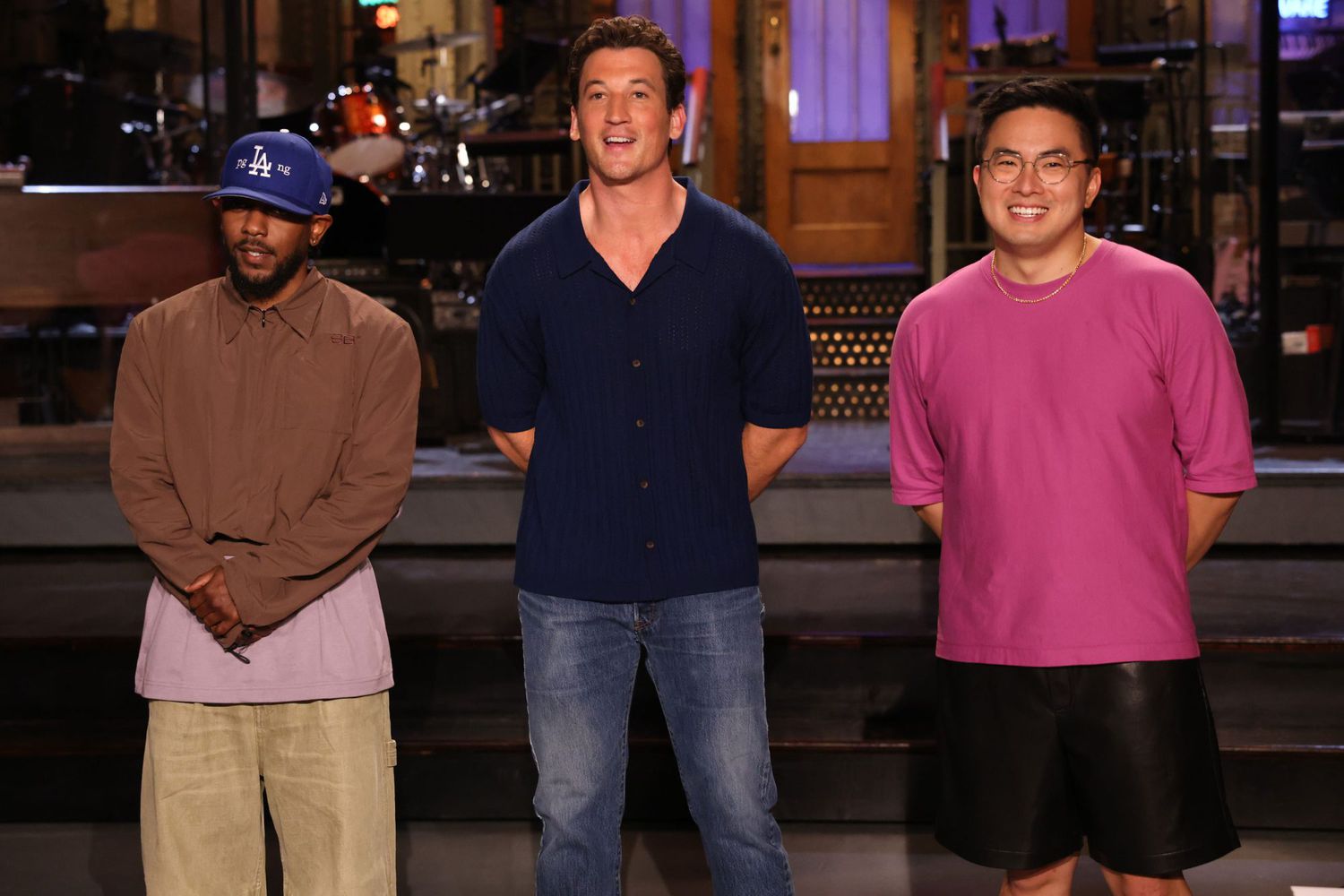
SNL premiere recap: Miles Teller hosts with musical guest Kendrick Lamar - Entertainment Weekly News

SNL premiere recap: Miles Teller hosts with musical guest Kendrick Lamar | EW.com

this link is to an external site that may or may not meet accessibility guidelines.

Adblock test (Why?)

Article From & Read More ( SNL premiere recap: Miles Teller hosts with musical guest Kendrick Lamar - Entertainment Weekly News )
https://ift.tt/NtGZlum
Entertainment

Saturday, October 1, 2022

'Saturday Night Live' Season 48 to premiere after biggest cast overhaul ever - Fox News

As "Saturday Night Live" cast members prepare for Season 48, viewers will see multiple new faces on stage tonight after the largest cast overhaul in its history. 

Executive producer and creator Lorne Michaels blamed the pandemic for the late-night comedy show's recent turnover.

‘SNL’ PRODUCER LINDSAY SHOOKUS LEAVES SHOW AFTER 20 YEARS: ‘FOREVER GRATEFUL’

"The pandemic had put us in this position where no one could really leave, because there were no jobs," Michaels said, according to the New York Times. 

He continued to say that there "was no place to go" for the comedians who have been on the show for years amid the tumultuous times of the pandemic – which he called a "transition year."

Some of ‘Saturday Night Live’s' prominent cast members who exited the stage for good include Alex Moffat, Melissa Villaseñor and Aristotle Athari, as well as Aidy Bryant, Pete Davidson, Kate McKinnon and Kyle Mooney.

Some of ‘Saturday Night Live’s' prominent cast members who exited the stage for good include Alex Moffat, Melissa Villaseñor and Aristotle Athari, as well as Aidy Bryant, Pete Davidson, Kate McKinnon and Kyle Mooney. (Mary Ellen Matthews/NBC/NBCU Photo Bank via Getty Images)

Prominent cast members who exited the stage for good include Alex Moffat, Melissa Villaseñor and Aristotle Athari, as well as Aidy Bryant, Pete Davidson, Kate McKinnon and Kyle Mooney, who have been on the show for years.

‘SNL’ ANNOUNCES FOUR NEW CAST MEMBERS AHEAD OF SEASON 48

A few former "SNL" staff made the decision to leave and pursue other opportunities. 

A few former "SNL" staff made the decision to leave and pursue other opportunities. 

A few former "SNL" staff made the decision to leave and pursue other opportunities.  (Will Heath/NBC/NBCU Photo Bank via Getty Images)

‘SNL’ FINALE: PETE DAVIDSON SAYS GOODBYE TO HIS ‘HOME'; KATE MCKINNON ABDUCTED BY ALIENS

NBC announced that Marcello Hernandez, Molly Kearney, Michael Longfellow and Devon Walker are joining the show.

"Top Gun 2" actor Miles Teller will open Season 48 by hosting for the first time, with musical guest Kendrick Lamar. 

(Returning ‘Saturday Night Live’ cast members Kenan Thompson, Heidi Gardner, Mikey Day, Andrew Dismukes, Chloe Fineman, James Austin, Punkie Johnson, Bowen Yang, Michael Che, Colin Jost, Ego Nwodim, Chris Redd, Sarah Sherman and Cecily Strong.)

They will join returning cast members Kenan Thompson, Heidi Gardner, Mikey Day, Andrew Dismukes, Chloe Fineman, James Austin, Punkie Johnson, Bowen Yang, Michael Che, Colin Jost, Ego Nwodim, Chris Redd, Sarah Sherman and Cecily Strong.

CLICK HERE TO SIGN UP FOR THE ENTERTAINMENT NEWSLETTER

The restructuring of the comedians is the biggest change to the size of the cast in nearly a decade. 

In 2013, Jason Sudeikis, Fred Armisen and Bill Hader said goodbye to "SNL" after Season 38, in addition to Seth Meyers leaving mid-season due to his new gig with NBC’s "Late Night."

CLICK HERE TO GET THE FOX NEWS APP

Eight more cast members joined "SNL" after Colin Jost took over the "Weekend Update" segment, following Meyer’s farewell.

The new season of "Saturday Night Live" premieres Oct. 1.

Adblock test (Why?)

Article From & Read More ( 'Saturday Night Live' Season 48 to premiere after biggest cast overhaul ever - Fox News )
https://ift.tt/amYyZDA
Entertainment

Search

Featured Post

Box Office: Michael B. Jordan’s ‘Creed III’ Grabs Title With Series-Best $51M Opening - Hollywood Reporter

Director-actor Michael B. Jordan ’s Creed III is a box office champ. If early estimates hold, the movie is on course to open to a better...

Postingan Populer